
Table of Contents
TogglePricing Trends for Mini Highland Cows in 2025–2026: Essential Information for Global Buyers
If you’re looking into Mini Highland Cow Price Trends for 2025–2026 this is the resource. This detailed guide covers the factors influencing prices typical price ranges buyers encounter how color and generation influence worth additional expenses to consider (such as international shipping) and tips on identifying a reliable breeder, for mini Highland cow price deliveries worldwide.
I’ll employ language, real-world examples and straightforward buyer-centered guidance so that no matter if you’re purchasing in the USA, Canada, Europe, the UK, Australia, the Middle East, Africa or Asia. You’ll grasp the market dynamics influencing Mini Highland Cow Price Trends for 2025–2026 and how to secure the ideal animal for your needs.
Brief Overview (For Those Scanning)
The demand for Highland cattle continues to be robust, in 2025 and throughout 2026; prices have typically increased compared to the 2019–2021 timeframe.
Common price ranges vary based on the category (pet-quality versus breeding-quality versus micro/multi-generation animals). Anticipate a spectrum. From a few thousand dollars for standard animals to tens of thousands, for outstanding DNA-certified micro minis.
Key price drivers: rarity (micro/minis), generation (F3+ stabilized lines), color, pedigree, halter/training, health documentation, and shipping/export costs.
Global shipping is broadly accessible, via livestock carriers. Yet transportation and documentation may increase expenses and complexity significantly.
For a purchasing approach concentrate on registration, medical history, media, references and a breeder experienced in international shipping.
I provide an explanation of all this below along, with advice you can apply immediately.
Reasons for Price Fluctuations: Economic Context Influencing Mini Highland Cow Price Trends for 2025–2026
Multiple general elements are propelling the market:
Growing Consumer Demand for Novelty and Companion Livestock
Tiny and “micro” forms of breeds have turned into lifestyle choices (pets, small-scale farms, therapeutic initiatives and social media attraction). This consistent demand drives prices for the most uncommon animals.
Supply-Side Limits and Breeding Time
Developing mini Highland cow price isn’t a rapid process. It usually requires numerous generations of careful breeding to maintain a small size while ensuring good health, temperament and coat quality. Limited availability raises their worth.
Increased Transparency and Registration Expectations
Nowadays purchasers demand DNA confirmation, registration and complete veterinary documentation. Animals accompanied by all paperwork fetch prices; those without registration sell, for less but come with increased risk.
Shipping, Export Regulation, and Rising Logistics Costs
Following the fluctuations in air freight rates tougher regulations on animal welfare and more complicated export/import documentation have collectively raised the overall landed expenses, for global purchasers.
General Inflation and Cost of Raising Livestock
Expenses, for feed veterinary care, labor and facilities increased in areas and responsible breeders transfer these higher costs to purchasers.
These factors together create the setting for Mini Highland Cow Price Trends for 2025–2026: high demand + limited niche supply = increased prices, particularly, for the top-quality animals.
Common Price Brackets Expected in 2025–2026
Costs differ depending on the area, breeder, generation and intended use. The ranges shown below represent the market for 2025–2026, in categories. Consider them as estimates, not certainties.
Pet-Quality Mini Highland Cow Price (Unregistered / Basic)
$2,000 – $6,000
Good for backyard companions but may lack pedigree paperwork.
Registered or Standard Breeding-Quality Mini Calves (F1–F2 Lines)
$5,000 – $12,000
Registered, healthy, suitable for small breeding programs.
Higher-Generation DNA-Verified Mini or Micro Highland (F3–F6)
$10,000 – $30,000+
These are lines featuring a predictable small scale; micro minis and extremely rare color genetics drive prices toward the upper range.
Show or Rare-Color Specimens
$12,000 – $40,000+
These prices are driven by rarity show victories or outstanding conformation.
Steers and Companion Animals
Often priced lower than breeding stock, commonly $2,000 – $8,000 depending on training and registration.
Keep in mind: these labels reflect the buying prices. Include costs, for transport export/import charges, quarantine, local veterinary inspections fencing and setting up shelter in your budget.
What Will Differ Between 2025 and 2026 (Short-Term Trend Overview)
Demand is expanding across regions. Interest, outside the Highland bases (UK, USA, Canada) now encompasses purchasers in areas of Asia, the Middle East and the Gulf seeking companion or premium lifestyle animals.
Micro and “teacup” categories continue to be the unstable. Once breeders verify stable micro-mini strains prices soar. And purchasers hurry to obtain them.
An increasing number of buyers anticipate export services. Breeders managing permits, health documents, crates and airport procedures are favored. Can demand higher fees, for all-inclusive global shipping.
Transparency, in sustainability and welfare is increasingly important. Purchasers are more willing to invest in breeders who follow low-density breeding practices and maintain strong welfare standards.
The factors mentioned above influence Mini Highland Cow Price Trends for 2025–2026: this sector values certified uniqueness, clarity and comprehensive service provision.
How Lineage, Generation, and Color Influence Cost
Pedigree and Generation
F1 / early-generation minis: good for pet owners, somewhat less predictable adult size → lower price.
F3–F6 and beyond: breeders have fixed size traits resulting in higher value. Those aiming for breeding should focus on animals from later generations.
Color Genetics
Common colors (red, black, yellow): abundant → standard pricing.
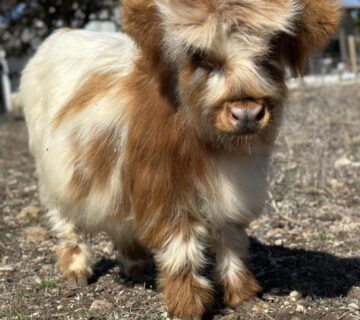
Uncommon hues (silver, white, brindle, dun): sought after with availability → may cause significant price hikes.
Temperament and Training
Calves that are halter-trained halter-broken and socialized cost more since they save purchasers time and lower the chance of handling difficulties.
Health and Documentation
Comprehensive veterinary exams, immunization records, parasite treatments, microchipping and DNA analysis contribute to expenses. Benefits. Always request documentation.
These are the factors affecting Mini Highland Cow Price Trends for 2025–2026. Better documentation leads to a higher price but significantly lower risk.
The Real Cost of “Worldwide”: Shipping, Paperwork, and Landed Price
When purchasing from abroad the initial cost is the beginning:
Typical Shipping-Related Costs to Budget For
Export veterinary checks and health certificates (required by origin and destination countries)
Air or road transport to airport or port
Air cargo crate (livestock-approved) and handling fees
Import permits, customs clearance and any required quarantine
Local transportation from port/airport to your property
Practical fees: crate rental, flight uplift, agency fees
In summary: the cost of shipping may range from a hundred dollars to several thousand (or beyond) influenced by distance and quarantine rules. For buyers shipping frequently adds between $2,000 and over $10,000 to the overall landed expense.
Regional Pricing Differences Buyers Should Know
North America (USA & Canada)
A developed market with broad availability and simpler transport.
UK & Europe
Heritage bloodlines and exhibition animals drive premium pricing.
Australia & New Zealand
Strict regulations and distance impact shipping costs.
Middle East & Gulf States
High demand for unique livestock; premium pricing common.
Asia & Africa
Emerging markets with pricing driven by import access and demand.
Hidden Costs and Ongoing Ownership Expenses
Owning a miniature Highland cow includes:
Hay and pasture maintenance
Veterinary care
Hoof trimming
Shelter and fencing
Insurance and biosecurity
First-year care costs may range from $1,000–$4,000 or more.
How to Evaluate Listings and Avoid Pitfalls
Watch for missing documents, prices far below market value, lack of recent videos, unsafe payment methods, or no references.
Buying Strategy for 2025–2026
Define purpose, prioritize documentation, request size history, evaluate total landed cost, and secure post-purchase support.
Negotiation Advice That Works
Bundle services, buy off-season, explore multi-animal discounts, and negotiate respectfully using documentation.
Ethics and the True Cost of Cheap Animals
Lower prices often reflect lower welfare. Ethical breeding costs more but reduces long-term risk.
Frequently Asked Questions (FAQ)
What price range should I expect for a pet-quality mini?
Are micro or mini Highland cow price worth the premium?
Can I import a Highland cow to my country?
Can shipping cost more than the animal?
How do I verify a breeder?
Final Buyer Checklist for Mini Highland Cow Price Trends for 2025–2026
Purpose defined
Documentation requested
Videos reviewed
Health records confirmed
Total cost calculated
Post-arrival support verified
Closing: Where to Go Next
If you want help contacting breeders, preparing vet checklists, or comparing landed costs, support is available to guide your next step.
No comment